Landscaping · 11 min read
How Much Does Landscaping Cost? A Realistic Price Guide
By House of Horticulturists · 27 August 2026
One of the first questions almost every homeowner has before starting a garden project is simple: how much is this actually going to cost? It's also one of the hardest to answer honestly, because landscaping costs vary enormously depending on the size of the garden, the materials chosen, ground conditions, access, and how much groundwork is needed before anything visible even goes in. This guide sets out realistic price ranges for the most common landscaping jobs across south west London and the surrounding Surrey and Berkshire towns we work in, what actually drives cost up or down, and how to make sure a quote reflects the real scope of work rather than a stripped-back version of it.
Why landscaping costs vary so much
No two gardens cost the same to landscape, even for what sounds like an identical job on paper. A patio of the same size can cost noticeably more or less depending on how level the existing ground is, how easily materials and machinery can access the site, what's underneath the surface once excavation starts, and whether existing structures, old paving, a dead tree stump, a failing fence, need removing before the new work can begin.
Garden size and typical plot layout also vary considerably by area. Larger, more established gardens like those common around Cobham or Kingswood tend to involve bigger-scope projects with more groundwork and planting, while the compact courtyard and terraced gardens typical of Wandsworth or Fulham usually mean smaller overall spend but sometimes a higher cost per square metre, since a lot of the same preparation and access considerations apply regardless of plot size. This is exactly why two quotes for what looks like the same job on the surface can come back with very different figures, and why it's worth treating any price guide, including this one, as a starting point for a conversation rather than a fixed number to hold a quote against.
What actually drives the cost of a project
- ›Garden size and the total area being worked on, larger areas generally cost less per square metre but more overall.
- ›Ground conditions, heavy clay, poor drainage or a sloping site all add groundwork time and cost compared with level, well-drained ground.
- ›Access, a garden reachable directly by vehicle and machinery costs less to work in than one requiring materials to be moved through a house or over a long distance by hand, a common factor in denser urban areas.
- ›Material choice, natural stone, porcelain, timber and composite all sit at different price points, and the specific product chosen within each category varies considerably too.
- ›Removal and disposal of existing features, old paving, a redundant shed, overgrown planting or a failing structure all need clearing before new work starts, and this is easy to underestimate.
- ›The amount of design and planning involved, a straightforward like-for-like replacement costs less to plan than a full garden redesign with new levels, drainage and planting.
Patio and paving costs
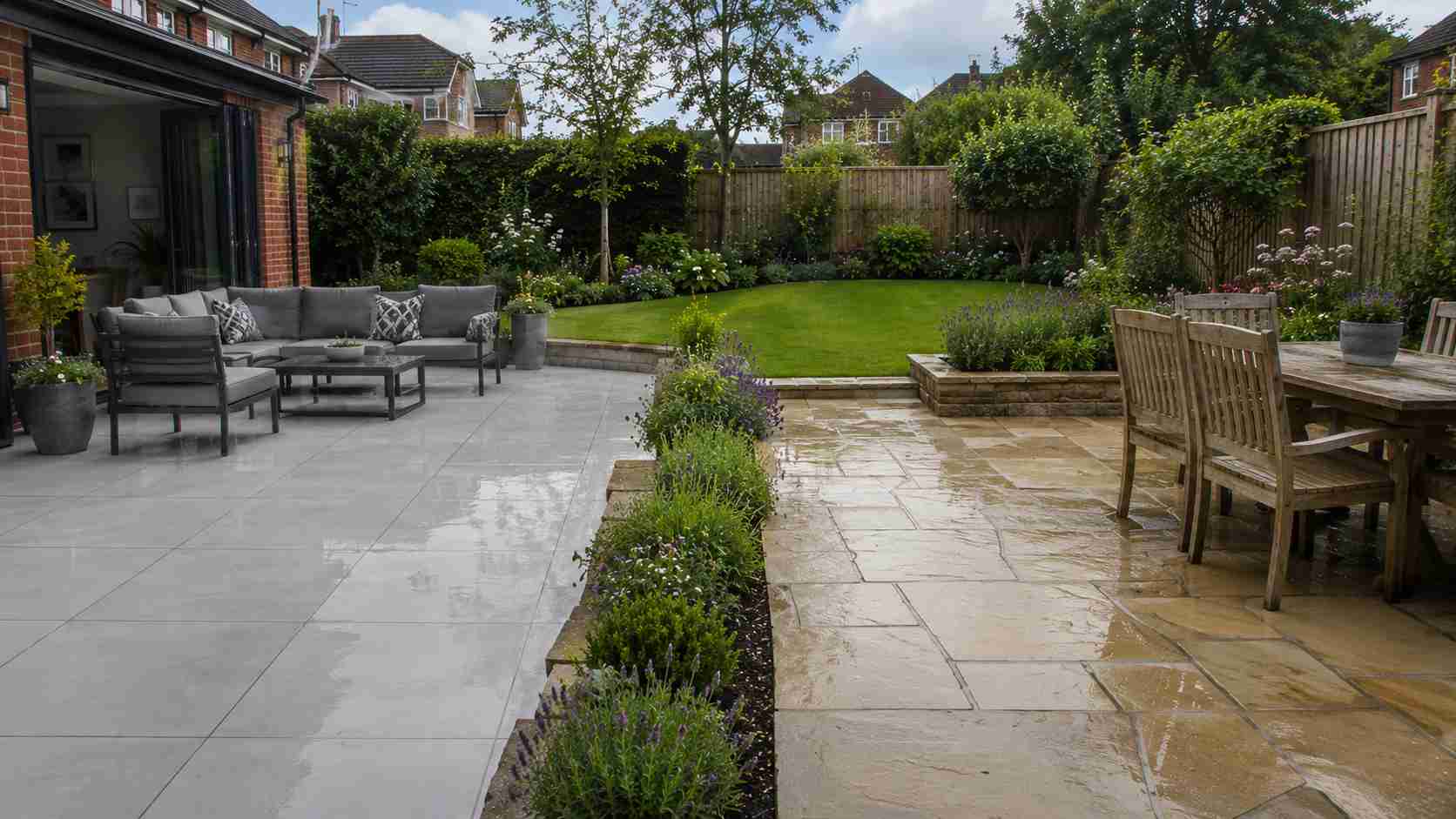
Patio costs vary largely by material. As a general guide, concrete paving slabs tend to sit at the more affordable end, natural stone sits in the middle to upper range depending on the specific stone chosen, and premium porcelain typically sits at the higher end, reflecting both material cost and the more specialist cutting and laying it requires. On top of material, the cost of excavation, sub-base and drainage is often similar regardless of which surface goes on top, which is why a smaller, simpler patio in a cheaper material can sometimes cost more per square metre overall than a larger one, the groundwork doesn't scale down proportionally with size.
For a genuinely accurate figure for your own garden, our Patio & Paving service can provide a detailed quote based on your specific ground conditions, chosen material and access, rather than a generic average that may not reflect your actual project.
Decking costs
Decking costs depend heavily on whether you choose timber or composite. Timber decking generally costs less to install initially but comes with ongoing maintenance costs over its lifetime, cleaning, treating and occasionally replacing boards. Composite decking costs more upfront but needs very little maintenance beyond routine cleaning, so the total cost over 15 to 20 years can end up more comparable than the initial price difference suggests.
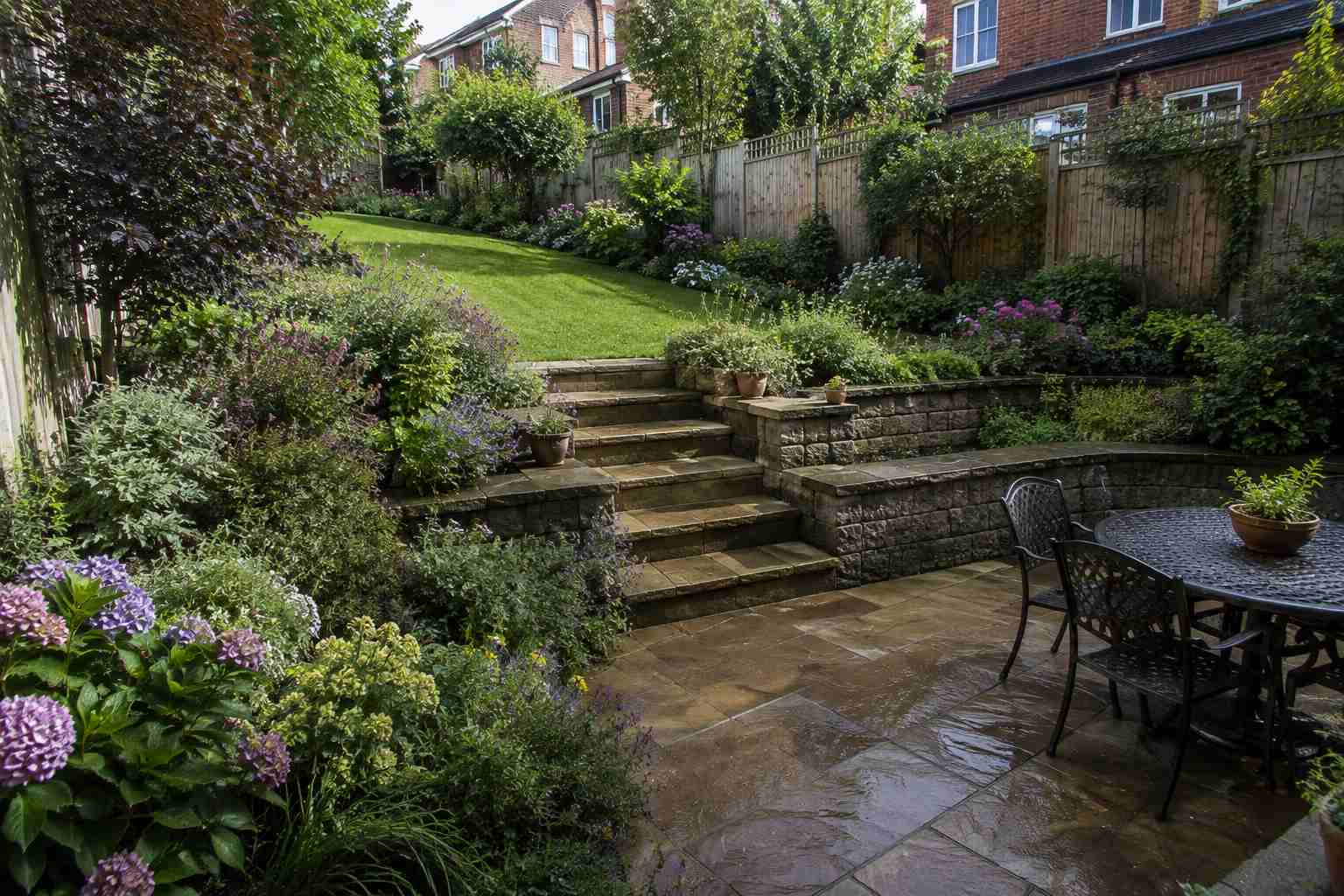
Raised or split-level decking on a sloping garden costs more than a simple ground-level deck, since it involves additional structural framework and support, something we see fairly often on the more undulating plots around Oxshott and Kingswood. Our Decking service can give a specific price once we know your garden's level changes, chosen material and the size of deck you're after.
Lawn and turfing costs
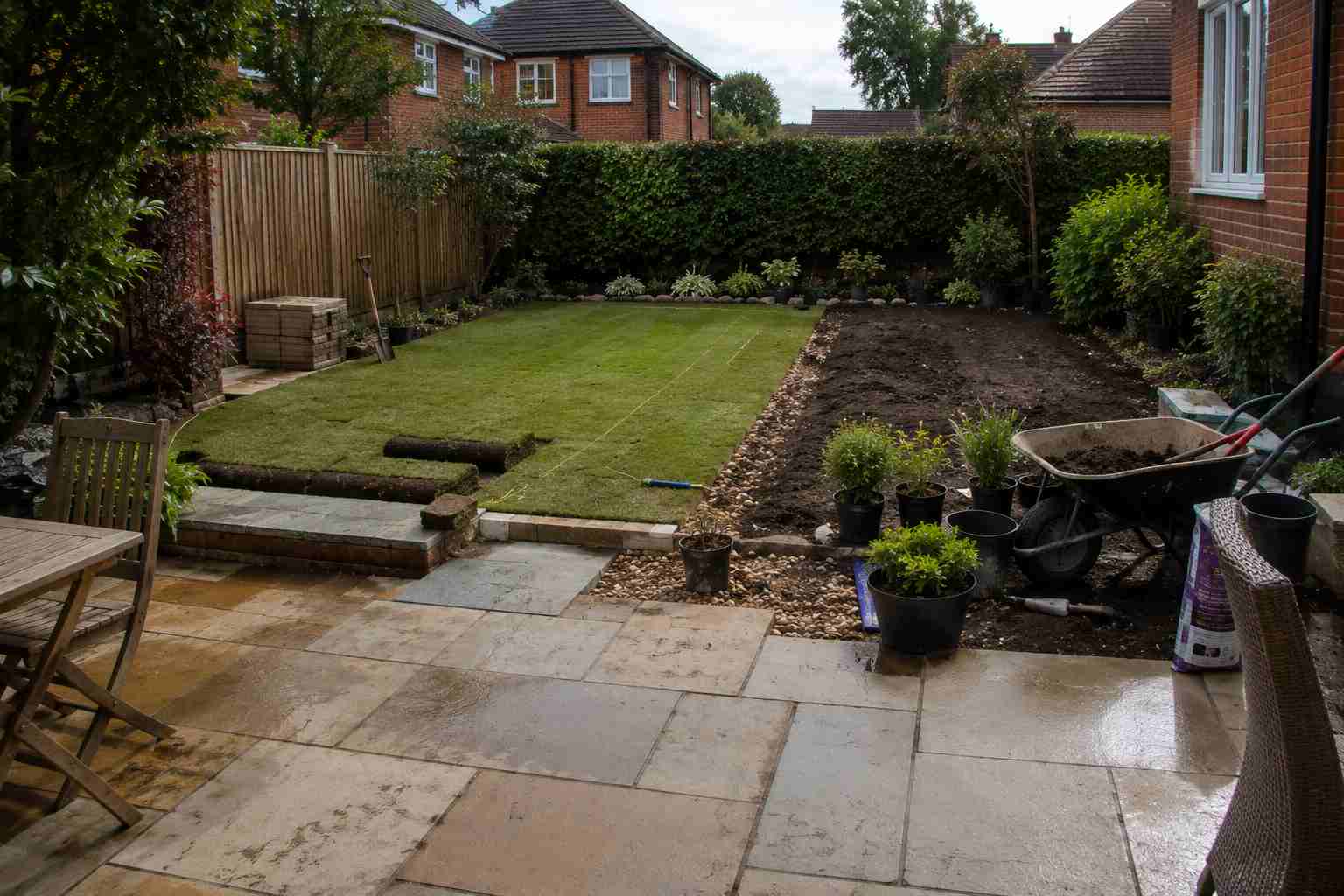
Turfing costs depend on the quality of turf chosen and the amount of ground preparation needed beforehand. A lawn going onto reasonable existing soil costs considerably less to prepare than one going onto poor, compacted or heavily weed-infested ground, which needs more extensive clearing, levelling and soil improvement before turf can even be laid.
Grass seed is generally the more affordable route to a new lawn compared with turf, but it takes considerably longer to establish and needs careful aftercare in its first few months, an important trade-off to weigh against turf's higher upfront cost but near-instant result. Our Lawn Installation & Turfing service can advise on which option suits your timeline and budget best.
Driveway costs
Driveway costs follow a similar pattern to patios: gravel is generally the most affordable surface, block paving sits in the middle, and resin-bound tends to sit at the upper end, largely reflecting material cost and the skill needed for correct installation. As with patios, the sub-base underneath is a major cost factor regardless of which surface is chosen, and it's the part of the job that determines whether the drive lasts decades or needs remedial work within a few years.
Drainage requirements can also affect driveway cost, particularly if planning permission or specific permeable surfacing is needed to meet current rainwater run-off rules, worth factoring in early rather than discovering partway through a project. This falls under the same Patio & Paving service, since the groundwork principles are identical to patio installation.
Fencing and hedge costs
Fencing costs vary by style, height and material, a simple closeboard fence generally costs less than a feather-edge or a more decorative style, and taller fences or those needing additional privacy screening cost more due to the extra material and labour involved. Ground conditions matter here too, fence posts set into concrete on firm ground install more quickly and cheaply than posts going into heavy clay or a sloping site needing stepped panels, something worth factoring in on the heavier ground typical of parts of Wallington.
Hedge planting costs depend on the size and species of plants chosen, bare-root hedging planted in the dormant season is considerably more affordable than the same hedge bought as larger, potted specimens for an instant effect. Our Fencing & Screens and Hedges, Pruning & Planting services can quote accurately once we know your boundary length, desired height and any access considerations.
Garden rooms and sheds
Garden rooms and sheds are priced quite differently from the rest of a landscaping project, since they're closer to a small building project than groundworks. Cost depends heavily on size, whether it's insulated and powered for year-round use as a home office or studio, the base it sits on, and how much site preparation and access work is needed to get materials in. A simple storage shed on a straightforward base sits at the affordable end, while a fully insulated, powered garden room sits considerably higher.
Our Garden Rooms & Sheds service can give an accurate figure once we know the intended use, size and your garden's access, since these details affect cost more than almost any other factor in this category.
Full garden design and redesign costs
A complete garden redesign, covering levels, hard landscaping, planting and drainage as one coordinated scheme, costs more than the sum of its individual parts might suggest, but it also typically delivers a more coherent, better-functioning result than piecing together separate projects over time. Costs here scale heavily with garden size, complexity of levels, and how much existing material needs clearing before new work begins.
This is genuinely one of the hardest categories to give a meaningful average for, since a small courtyard redesign in somewhere like Southwark and a large sloping garden overhaul in Weybridge are barely comparable projects. Our Garden Design & Landscaping service starts with a proper site visit and consultation specifically because an accurate quote depends on seeing the actual space, not applying a generic per-square-metre rate that ignores your garden's particular challenges.
Ongoing maintenance and cleaning costs
Beyond one-off landscaping projects, ongoing garden maintenance is usually priced either per visit or as part of a regular contract, and cost depends on garden size, how much is included, mowing, hedge trimming, border maintenance, seasonal jobs, and how frequently visits happen. A larger, more heavily planted garden visited weekly through the growing season costs more than a smaller, simpler garden maintained monthly, which is generally reflected in a tailored quote rather than a flat rate.
Pressure washing and waste removal is typically priced separately, either as a standalone visit for a patio, driveway or decking refresh, or bundled into a wider maintenance or landscaping project. Our Garden Maintenance and Pressure Washing & Waste services are both built around what a specific garden actually needs through the year, rather than a one-size-fits-all package, which is usually the more cost-effective approach in the long run.
Why cheap quotes can end up costing more
A significantly cheaper quote almost always means something has been reduced or left out, most commonly the groundwork underneath a patio, driveway or deck, since it's the part a homeowner can't easily inspect once the job is finished but the part that determines whether the result lasts. A shallow sub-base, inadequate drainage or corners cut on structural elements like retaining walls can look identical to a properly built job on the day it's finished, and then fail within a few years, at which point the original saving is usually wiped out by remedial work, sometimes several times over.
It's worth asking directly what a low quote includes and excludes, excavation depth, sub-base specification, drainage provision and waste removal are all worth confirming explicitly rather than assuming they're covered, since these are exactly the areas most often reduced to bring a headline price down.
How to get an accurate quote
- ›Be clear about the full scope, including any groundwork, drainage or removal of existing features, not just the visible finished result.
- ›Ask what's included in the sub-base and preparation, this is where cost differences between quotes usually come from.
- ›Get quotes based on an actual site visit rather than measurements alone, access and ground conditions genuinely change cost.
- ›Ask about materials specifically by name or product, rather than a general category, since cost within any material type varies considerably.
- ›Factor in whether the quote includes waste removal and disposal, an omission here can mean a surprise cost later.
Frequently asked questions
It depends heavily on the material chosen and the ground conditions underneath. Concrete paving sits at the more affordable end, natural stone in the middle to upper range, and premium porcelain typically at the top, but the sub-base and groundwork often account for a similar cost regardless of which surface goes on top.