Garden Design · 9 min read
Garden Lighting: How to Light a Garden Well
By House of Horticulturists · 23 August 2026
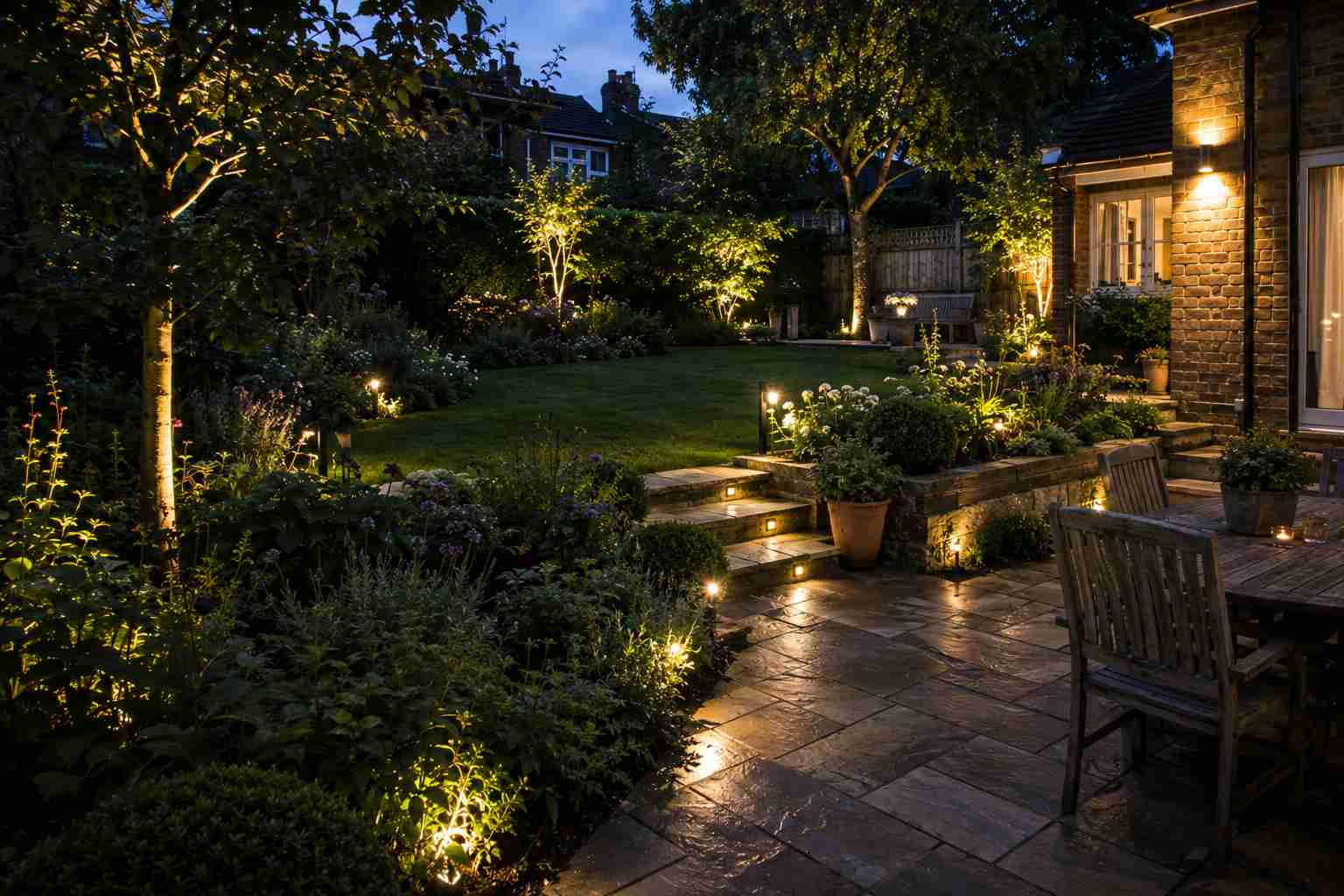
Lighting is one of the most transformative, and most consistently under-used, parts of garden design. Done well, it lets you use the garden well into the evening and turns it into something genuinely magical after dark, extending the useful hours of an outdoor space far beyond daylight. Done badly, it's a single glaring floodlight that flattens every shadow, annoys the neighbours, and gets switched off within a week.
Layer the light
The secret to good garden lighting is layers and restraint rather than brightness. A little light placed thoughtfully in the right spots consistently beats one bright floodlight trying to do everything at once. Combine gentle path and step lighting for safety underfoot, subtle uplighting on a few key trees or features for drama and focal interest, and soft, warm ambient light around anywhere you actually sit or dine.
Think of it in the same way as lighting inside a house, nobody lights a living room with a single ceiling spotlight and calls it finished, there's ambient light, task light and accent light working together. A garden benefits from exactly the same layered thinking rather than one light source trying to cover every function at once.
Light with purpose
- ›Practical: steps, paths and doorways lit for safe, confident movement after dark, this is the non-negotiable layer.
- ›Feature: uplighting a specimen tree, an interesting wall texture, or a water feature to create focal points and drama.
- ›Ambient: soft, warm light around seating and dining areas, where you actually want to linger rather than just pass through.
- ›Restraint: pools of light and shadow are consistently more atmospheric than flat, even glare across the whole garden.
Types of fixtures worth knowing
Uplights, small fittings recessed into the ground or mounted low, are ideal for washing light up a tree trunk, wall or piece of sculpture, creating dramatic shadow and texture rather than flat illumination. Downlights, often mounted higher in trees or under eaves, mimic natural moonlight falling through branches and are particularly effective over seating areas and paths.
Step and deck lights, recessed directly into the riser of a step or the edge of decking, provide exactly the safety lighting steps need without any visible fitting cluttering the design. Bollard lights work well along paths and border edges, marking a route clearly without needing to be bright, while string or festoon lighting over a dining or seating area adds warmth and occasion without any of the more formal, architectural feel of recessed fittings.
Low-voltage vs mains-powered systems
Most modern garden lighting runs on a low-voltage system, stepped down from mains power via a transformer, which is safer to install and work with outdoors than running mains voltage directly to every fitting. Low-voltage systems have made garden lighting considerably more accessible and flexible, cabling is thinner, fittings are smaller, and the risk if something goes wrong is far lower than with mains voltage exposed to the elements.
That said, the transformer and any connection back to the mains supply still needs to be installed correctly and to the appropriate standard, and any fully mains-powered outdoor fitting absolutely needs a qualified electrician. This is genuinely not the place to improvise with extension leads and indoor-rated fittings, however tempting a quick DIY job might seem.
Solar and smart lighting options
Solar lighting has improved considerably and can work well for lower-priority accents, marking a path edge or adding a soft glow to a border, without any cabling at all. It's rarely bright or consistent enough to be the main lighting for steps, seating areas or dining spaces, where reliable, controllable light matters more, but as a supplementary layer it's a genuinely useful, low-cost option.
Smart control systems, whether app-based, voice-controlled or on a simple timer, add real convenience by letting different zones, path lighting, feature lighting, ambient seating light, be controlled and scheduled independently. This means the practical safety lighting can come on automatically at dusk while feature and ambient lighting stays reserved for evenings you're actually using the garden, rather than everything running on the same switch regardless of need.
Plan it with the landscaping
Cabling is far easier and cheaper to run before surfaces go down, which is exactly why lighting is best planned alongside a patio or wider landscaping project rather than bolted on as an afterthought once everything else is finished. Retrofitting lighting into a completed patio or path means lifting surfaces that were never designed to come up again, considerably more disruptive and expensive than running cable during the original build.
Lighting built into steps, walls and decking from the outset looks properly integrated precisely because it is, recessed fittings sit flush, cable routes are hidden within the structure, and nothing looks like it was added on top after the fact.
Common garden lighting mistakes
- ›Over-lighting the whole garden evenly, which flattens shadow and depth rather than creating atmosphere.
- ›Choosing fittings that are too bright for their purpose, a step light doesn't need to illuminate the whole border, just the step.
- ›Positioning lights so they shine directly into windows, seating areas, or a neighbour's garden, causing genuine annoyance rather than ambience.
- ›Treating lighting as an afterthought once landscaping is finished, leading to visible surface-mounted cable and compromised fitting positions.
- ›Using indoor-rated fittings or extension leads outdoors, a real safety risk rather than a minor shortcut.
Do it safely
Outdoor electrics must be installed to the proper standards and use fittings genuinely rated for wet, outdoor conditions, this is a job worth having done correctly by a qualified installer rather than improvised, whatever the low-voltage marketing suggests about DIY simplicity. Anything mains-powered outdoors, or any connection back to the household mains supply, needs a qualified electrician, and current regulations around outdoor and garden electrical work should always be checked and followed rather than assumed.
Good garden lighting is one of those upgrades that genuinely changes how a garden is used, extending it from a daytime-only space into somewhere enjoyed on summer evenings and even through parts of the darker months. It's a detail worth getting right from the design stage of any garden project we take on, whether that's a compact courtyard or a larger plot with more features to draw attention to after dark.
Frequently asked questions
Ideally during the landscaping, before patios, decking and paths are finished, running cables under completed surfaces afterwards is disruptive and costly. If you're planning a garden project, decide on lighting at the design stage rather than after the hard landscaping is finished.