Lawns · 9 min read
Why Moss Takes Over a Lawn, and How to Deal With It
By House of Horticulturists · 16 August 2026
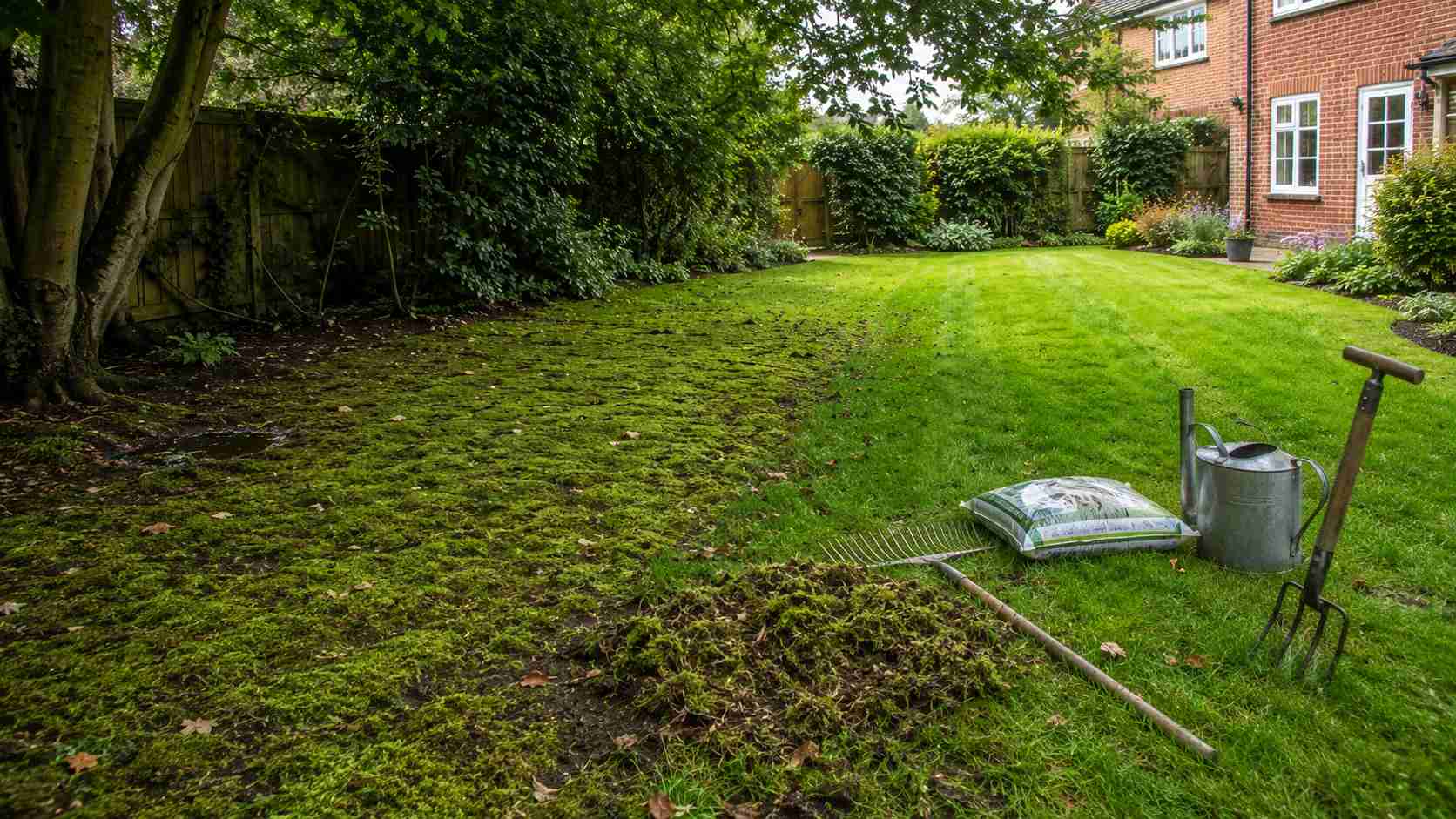
Moss thrives exactly where grass struggles, so a mossy lawn is really a message about the conditions underneath it rather than a random invader. You can rake and treat moss endlessly, and it will keep coming back every single time, unless you also improve whatever's letting it in in the first place. Understanding the actual cause is what turns a repeat annual chore into a lawn that genuinely recovers.
What moss is telling you
Moss moves in wherever the lawn is weak: shade, poor drainage, compacted soil, cutting too short, or low fertility. Each of these conditions thins out the grass and hands moss exactly the space and dampness it needs to spread, moss doesn't compete with healthy, vigorous grass, it simply fills in wherever grass has already given up.
So the moss itself isn't really the problem, it's a symptom of something else going on beneath the surface. That's exactly why moss killer alone gives such short-lived results, it clears what's currently there without changing any of the reasons it arrived in the first place, which is why the same patches so reliably reappear a season or two later.
The most common underlying causes
- ›Shade from trees, fences, buildings or hedges, which weakens grass growth and lets damp, shade-loving moss establish instead.
- ›Compacted soil, often from regular foot traffic or heavy mowing equipment, which stops air, water and nutrients reaching the roots.
- ›Poor drainage, leaving the surface damp for long periods, ideal moss conditions and hostile to healthy grass roots.
- ›Mowing too short, which stresses grass and thins it out, giving moss an easy opening at ground level.
- ›Low soil fertility or an imbalanced pH, both of which favour moss over grass, since grass needs decent nutrition to stay competitive.
- ›Thatch build-up, a spongy layer of dead organic matter that traps moisture at the surface and smothers healthy grass growth beneath it.
How to tackle it properly
- ›Improve drainage and relieve compaction, aeration helps significantly by opening up the soil structure so air and water can actually reach the roots.
- ›Raise your mowing height so the grass isn't scalped, taller grass shades out moss spores and competes far more effectively.
- ›Reduce heavy shade where you can, by thinning overhanging branches, or choose shade-tolerant grass seed varieties for spots that can't be opened up.
- ›Scarify to rake out existing moss and thatch, then overseed the bare areas this inevitably leaves behind.
- ›Feed the lawn with an appropriate fertiliser so the grass is genuinely vigorous enough to outcompete moss rather than just tolerate it.
The order that works
The sequence genuinely matters, and doing it out of order wastes effort. Treat or rake out the moss first, then scarify to pull dead moss and thatch clear of the lawn surface, then aerate to fix any underlying compaction, then overseed and feed so grass has everything it needs to fill the gaps left behind.
Do this in autumn or spring, when grass is actively growing rather than dormant, so the lawn recovers and fills in quickly rather than sitting bare for weeks and inviting the moss straight back in before the grass has had a chance to establish.
Scarifying explained
Scarifying is the step people most often skip, but it's arguably the most important one. It involves raking or mechanically combing the lawn to physically remove dead moss, thatch and debris that's built up at the base of the grass, opening the surface back up so light, air, water and any subsequent feed or seed can actually reach the soil. Done thoroughly, a lawn will look considerably worse immediately afterward, thinner and more torn up, before it looks better, this is completely normal and part of the process rather than a sign anything's gone wrong.
Aeration and drainage
Where compaction or poor drainage is the underlying cause, aeration is what actually fixes the problem rather than just treating the symptom. Spiking or hollow-tine aerating the lawn relieves compacted soil and creates channels for water and air to reach the root zone, giving grass roots room to grow deeper and stronger. On persistently waterlogged lawns, aeration alone sometimes isn't enough, and more significant drainage work may be needed, something worth getting properly assessed rather than guessing at.
When moss keeps coming back
If moss returns to the same patches year after year despite treatment, it's a reliable sign that the underlying cause hasn't actually been addressed, most commonly persistent shade or drainage that a single scarify-and-feed routine can't fix on its own. In these cases it's worth stepping back and looking at the bigger picture: has a tree grown and cast more shade than it used to, has the ground level changed, or is the lawn simply in a spot that's fundamentally unsuited to thriving grass. Our lawn installation and turfing service can assess persistent problem areas properly, sometimes the fix is levels and drainage rather than repeated treatment of the symptom.
The honest bit
If the shade, drainage or compaction stays the same, the moss returns, every single time, no matter how thoroughly you scarify and feed. Fixing the underlying conditions is the only genuinely lasting solution, and sometimes that means accepting that a very shady, damp corner simply won't ever be lush, healthy lawn, and planting it up with shade-tolerant ground cover instead is the more realistic and ultimately better-looking answer.
For lawns that are otherwise in good condition but need this cycle done properly once rather than repeated DIY attempts, our regular garden maintenance plans build scarifying, aeration and feeding into the calendar at the right times of year, so it's dealt with as routine care rather than an occasional emergency fix. And where the whole garden's layout is contributing to the problem, deep shade from mature planting, poor levels, or a lawn positioned somewhere it was never going to thrive, a wider look through our garden design and landscaping service can address the cause rather than the symptom.
Frequently asked questions
Not on its own. Moss killer clears what's currently there, but if the underlying cause, shade, compaction, poor drainage or scalping, remains, the moss comes back. Treat the moss and fix the conditions together for a lasting result.