Planting · 10 min read
Why Autumn Is the Best Time to Plant Almost Anything
By House of Horticulturists · 5 August 2026
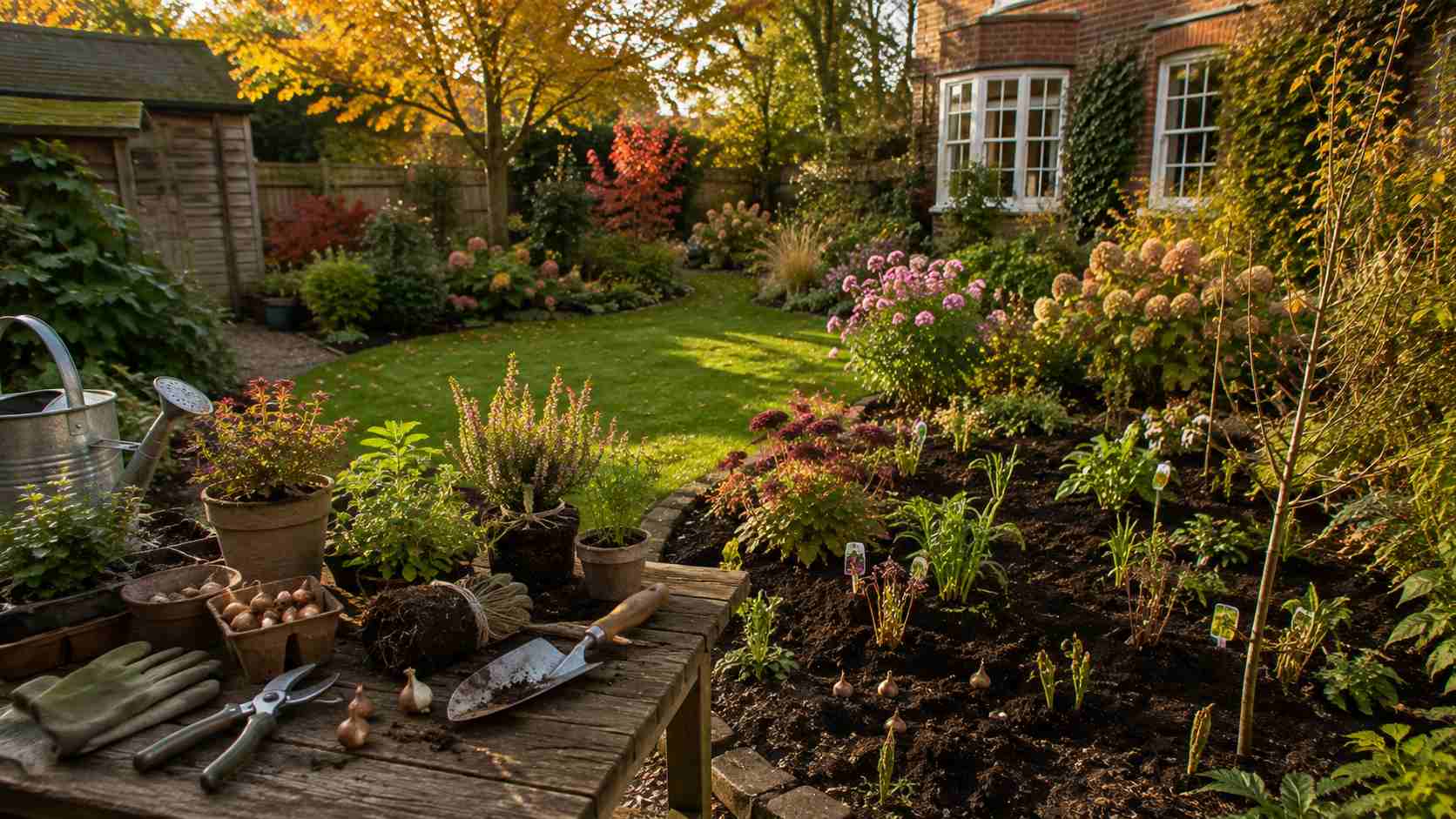
If you're planning a new hedge, tree or border, autumn is the season to do it. Planting while the soil is still warm and naturally moist gives roots months to establish before the demands of spring growth and summer heat arrive, which is exactly why many experienced gardeners treat autumn, not January, as the real start of the gardening year. It's less obvious than a spring planting spree, but it's the choice that consistently produces stronger, better-established plants.
Why autumn works so well
Through autumn the soil holds onto summer's warmth for weeks after the air has cooled, while regular rainfall keeps it consistently moist without any need for hosepipes or irrigation. That combination, warm ground and reliable water, is close to perfect for root development. New roots grow steadily through the cooler months, largely undisturbed, and are fully established by the time spring triggers a surge of top growth.
Compare that with spring planting, where a new hedge, tree or shrub has to build a root system and cope with active top growth and rising temperatures at the same time. It's not that spring planting fails, but it asks far more of a young plant in its first few months, and that stress shows up as slower establishment, more watering demands, and a higher chance of losses in a dry spell. Autumn planting largely sidesteps that struggle.
What's worth planting in autumn
- ›Hedging plants such as beech, hornbeam, yew and privet, ideal for establishing a strong new boundary before spring.
- ›Deciduous and evergreen trees, from ornamental specimens to larger shade trees, which settle in far more reliably than spring-planted stock.
- ›Roses, shrubs and many perennials, most of which are dormant or semi-dormant and transplant with minimal disruption.
- ›Spring-flowering bulbs, including daffodils, tulips and alliums, which need the cold months to develop properly before flowering.
- ›New turf and grass seed, which germinates and knits together quickly in warm, moist autumn soil.
Bare-root season saves money
Autumn and winter are also bare-root season: many hedging plants and trees are sold bare-root during their dormant period, considerably cheaper than the same plants sold potted later in the year. Bare-root stock is lighter to transport, easier to handle in volume, and often better value pound for pound because nurseries aren't paying to grow and maintain it in a container. It's the economical way to plant a long run of hedging, something we do a lot of through our hedge trimming and planting service, and it's simply not an option once the bare-root season ends in spring.
Giving new planting the best start
- ›Prepare the ground well, clear weeds and loosen compacted soil so roots aren't fighting their way into hard ground.
- ›Plant at the same depth it grew before; planting too deep is the single most common mistake, and it can stunt or kill an otherwise healthy plant.
- ›Firm the soil gently around the roots, water in well even if the ground is already damp, and mulch around the base to lock in moisture and suppress weeds.
- ›Stake young trees so wind doesn't rock the roots loose while they're trying to establish, a loose root ball is one of the most common causes of a tree failing to take.
- ›Keep everything watered through its first spring and summer, autumn planting reduces watering needs, it doesn't eliminate them once active growth resumes.
Autumn planting vs spring planting
It's a fair question, why not just wait for spring when everything is bursting into growth anyway? The honest answer is that spring-planted stock is playing catch-up all season. A tree or hedge planted in autumn has already built a functioning root system by the time a spring-planted equivalent is only just going in the ground, so by the following summer the autumn-planted specimen is typically noticeably ahead in size, vigour and resilience to drought.
Spring planting still has its place, tender and half-hardy plants that can't cope with winter cold are a genuine exception, and container-grown stock can technically go in year-round if watered carefully. But for anything hardy, hedges, trees, roses, shrubs and bulbs, autumn consistently gives the better long-term result for less ongoing effort.
Common autumn planting mistakes to avoid
- ›Planting too late in the season, once the ground turns cold and waterlogged, root growth slows right down and the advantage of autumn planting is lost.
- ›Skipping ground preparation because the weather feels less urgent than in spring, compacted or weed-choked soil undermines even well-timed planting.
- ›Forgetting to water newly planted stock simply because it's autumn, rain doesn't always reach root level, particularly under trees or against walls.
- ›Leaving stakes and ties on too long or too tight, which can restrict growth or damage bark as the plant establishes.
- ›Choosing the wrong plant for the soil and light conditions, autumn planting gives no advantage if the plant was never suited to the spot in the first place.
Autumn is project season too
The same logic applies to whole gardens, not just individual plants. Designing and building over autumn and winter means the landscaping is finished and planted before spring arrives, so it's ready to enjoy the moment the weather turns rather than being a building site through the best months of the year. Landscapers are also typically less booked through autumn and winter than during the spring rush, which usually means more flexibility on timing.
New turf also establishes brilliantly in autumn, with warm soil and free watering from the sky doing most of the work for you, producing a lawn that's fully knitted together and ready for use well before summer. It's the season we'd pick for our own gardens, whether that's a compact courtyard in Chelsea, a larger plot out toward Cobham, or anywhere else we work.
Frequently asked questions
Most hardy plants: hedges, trees, shrubs, spring bulbs and many perennials all establish well planted in autumn. Tender plants are the exception, they go in after the last frosts of spring.