Planting · 8 min read
Best Climbing Plants for Shade
By House of Horticulturists · 1 August 2026
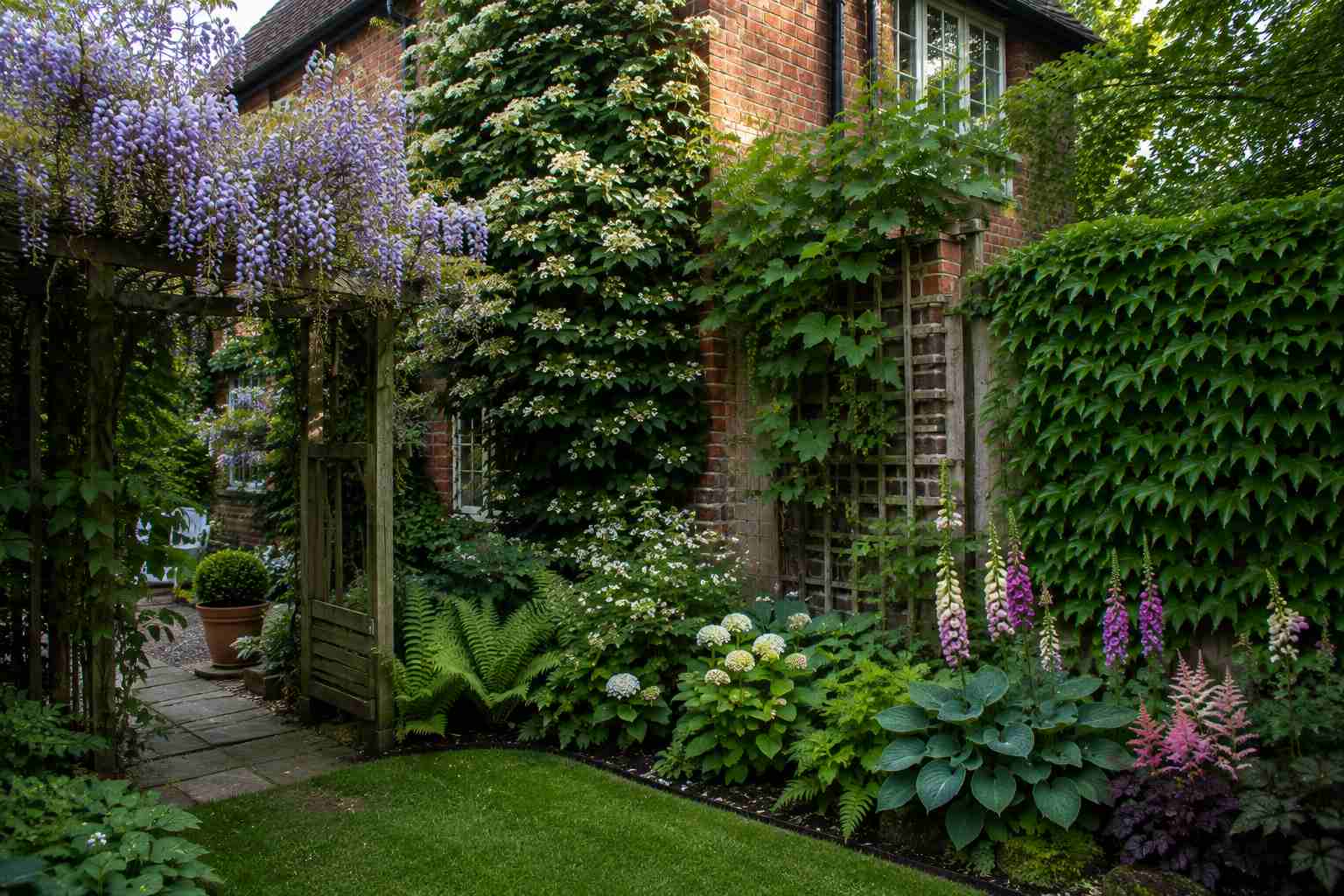
A shaded fence, north-facing wall or the space under a pergola doesn't rule out a good climber, it just narrows the choice. Some of the best options here actually earn their keep by creating shade rather than needing it, while others are genuinely happy growing in low light. Here are four dependable climbers worth considering, what makes each one useful, and how to keep them healthy.
1. Wisteria (Wisteria sinensis or Wisteria floribunda) - Key Features
- ›An extremely vigorous grower, capable of extending 3 to 9 metres in a single season once established, so it covers pergolas and large trellises quickly.
- ›Forms a dense canopy of foliage, making it one of the best choices for shading a seating area or pergola from above.
- ›Produces long, fragrant flower clusters in purple, blue or white through spring and early summer.
- ›A genuinely long-lived plant, a well-established wisteria can remain a feature of the garden for decades.
Wisteria - Care Tips
- ›Give it as much sun as possible, at least 6 hours of direct light a day, for the best flowering, even though the resulting canopy will cast good shade beneath it.
- ›Plant in well-drained, moderately fertile soil, wisteria adapts to most soil types but dislikes waterlogged roots.
- ›Prune twice a year, once in summer to control size and again in late winter to encourage flowering wood.
- ›Feed with a phosphorus-rich fertiliser to support strong flowering rather than just leafy growth.
2. Grapevine (Vitis vinifera) - Key Features
- ›Grows quickly and produces broad, dense foliage, making it effective at cutting glare and heat over a pergola or trained wall.
- ›Versatile in how it's trained, equally happy over an arch, along wires on a fence, or up a warm wall.
- ›A dual-purpose plant, providing both a green, shaded canopy and a genuine crop of grapes.
- ›Undemanding once established, needing little beyond routine pruning and occasional watering.
Grapevine - Care Tips
- ›Plant in well-drained, fertile soil with plenty of organic matter worked in beforehand.
- ›Prune annually while dormant, this is essential for both strong growth and a decent fruit crop, rather than optional tidying.
- ›Feed with compost or a balanced fertiliser to keep vines productive year on year.
- ›Train new growth onto wires or a frame as it develops, this is what turns a vine into effective green shade rather than a sprawling tangle.
3. Climbing Hydrangea - Key Features
- ›Genuinely shade-tolerant, thriving anywhere from partial shade to full shade, which makes it one of the few flowering climbers suited to a north-facing wall.
- ›Self-clinging, attaching to surfaces via aerial rootlets rather than needing wires or trellis.
- ›Produces large, fragrant white lace-cap flowers from late spring into summer, set against dense, dark green foliage.
- ›Slow to get going but ultimately vigorous, capable of reaching 9 to 15 metres given time and the right surface to climb.
Climbing Hydrangea - Care Tips
- ›Plant in moist, rich, well-drained soil and water regularly, particularly through dry spells, since it doesn't like drying out at the root.
- ›Prune only lightly, removing dead or overgrown stems after flowering rather than cutting back hard.
- ›Feed with compost or a balanced fertiliser in spring to support healthy new growth.
- ›Expect a slow first couple of years, this is a climber that rewards patience once it's established on its support.
4. Virginia Creeper (Parthenocissus quinquefolia) - Key Features
- ›Extremely fast-growing, quickly building the kind of dense cover that creates real shade over pergolas, fences and walls.
- ›Self-clinging via adhesive tendrils, so it needs no wires, trellis or tying in as it climbs.
- ›Green through summer, turning a vivid, fiery red in autumn before the leaves drop, giving strong seasonal interest.
- ›Drought-tolerant and adaptable once established, coping with a wide range of conditions with little fuss.
Virginia Creeper - Care Tips
- ›Grows well in most soil types but performs best in well-drained ground.
- ›Water moderately while young, once established it copes well with dry periods without extra watering.
- ›Trim occasionally to keep growth away from guttering, windows and roof tiles, and to keep its shape in check.
- ›Needs minimal feeding, an annual mulch of compost is generally enough to keep it growing well.
Getting the right climber for your garden
The right choice comes down to how much light the spot actually gets, what it needs to climb, and how much shade you want it to create rather than simply tolerate. Gardens with mature tree cover, like many of those around Chelsea and Fulham, often have a range of light levels across a single plot, which is exactly the kind of detail worth getting right before planting. If you'd rather have the right climbers chosen, positioned and trained properly from the start, our garden design and landscaping service takes care of matching planting to your garden's actual conditions.
Frequently asked questions
Climbing hydrangea is the most shade-tolerant option, coping with partial to full shade thanks to its self-clinging aerial rootlets. Virginia creeper also adapts well to lower light, while wisteria and grapevine flower and fruit best with more direct sun.